Skip to content
Tissue-Cypher-White-RGB (1)
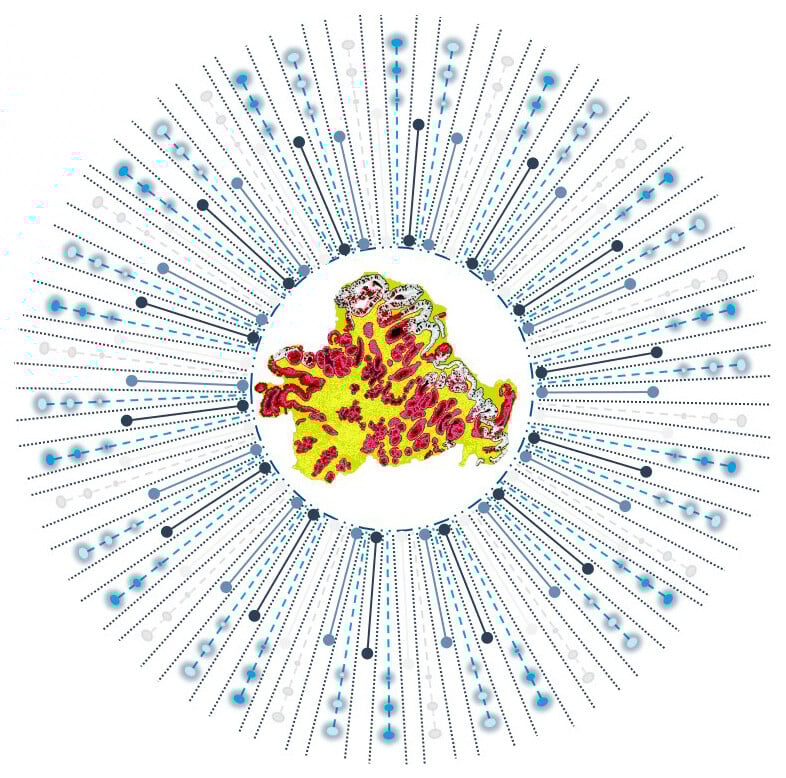
An illustration of a pinch biopsy and how TissueCypher can extract millions of spatialomic features.

Meet TissueCypher

TissueCypher is an AI-driven precision medicine test that helps predict the risk of progression to cancer in patients with Barrett’s esophagus. The test has the power to improve the standard of care for BE patients, many of whom are misclassified by traditional risk assessment.

The test has made it possible to assess molecular, cellular and morphological signatures in biopsies obtained during routine Barrett’s esophagus screening. The signatures identified by TissueCypher are powerful independent predictors of progression risk, and often precede the development of dysplasia, allowing for earlier identification, treatment, and management of truly high-risk BE patients.


An illustration of a pinch biopsy and how TissueCypher can extract millions of spatialomic features.

Prognostic. Precise. Proven. Personalized.

TissueCypher is the first prognostic test using the elegance and precision of objective spatialomics to risk stratify patients with BE. The test has been proven in numerous published, peer-reviewed studies to help provide BE patients with a personalized probability of progression, to help allow for optimized treatment and care.
Stomach and esophagus illustration

The first EAC prognostic test, strongly evidenced with 14 peer-reviewed publications and studied in more than 8,000 patients

tc-target-molecule

Independent analysis confirmed that TissueCypher is the strongest predictor of progression compared to clinical risk factors and pathology diagnosis

tc-plus-clipboard-icon

Actionable results, identify high-risk patients that progress at a rate equivalent to low-grade dysplasia and for whom increased surveillance or eradication therapy is appropriate

14 published clinical validation and utility studies using one of the largest sets of BE progressor patients ever assembled 

Learn more about the five foundational validation studies

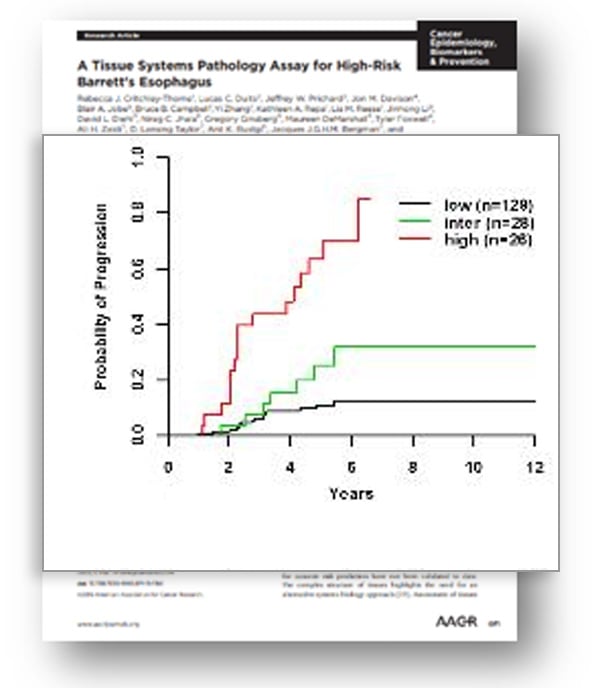
tc-temp-graph-1a

Incident progression from NDBE, IND, and LGD


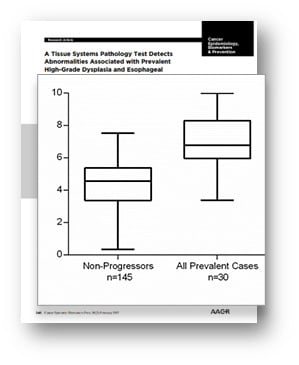
tc-temp-graph-2a

Identifying missed prevalent progression

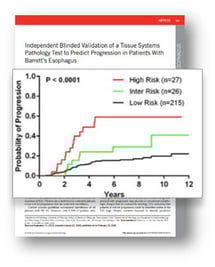
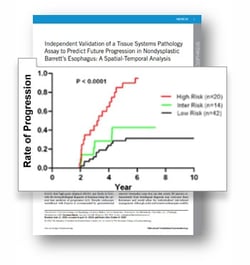
Independent validation for incident progression

tc-temp-graph-3a

Incident progression in non-dysplastic only

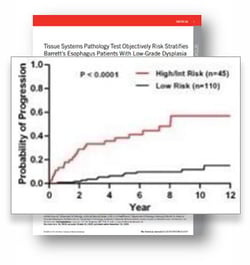
tc-temp-graph-4a

Predicting progression in community LGD

tc-temp-graph-5a